DUNK
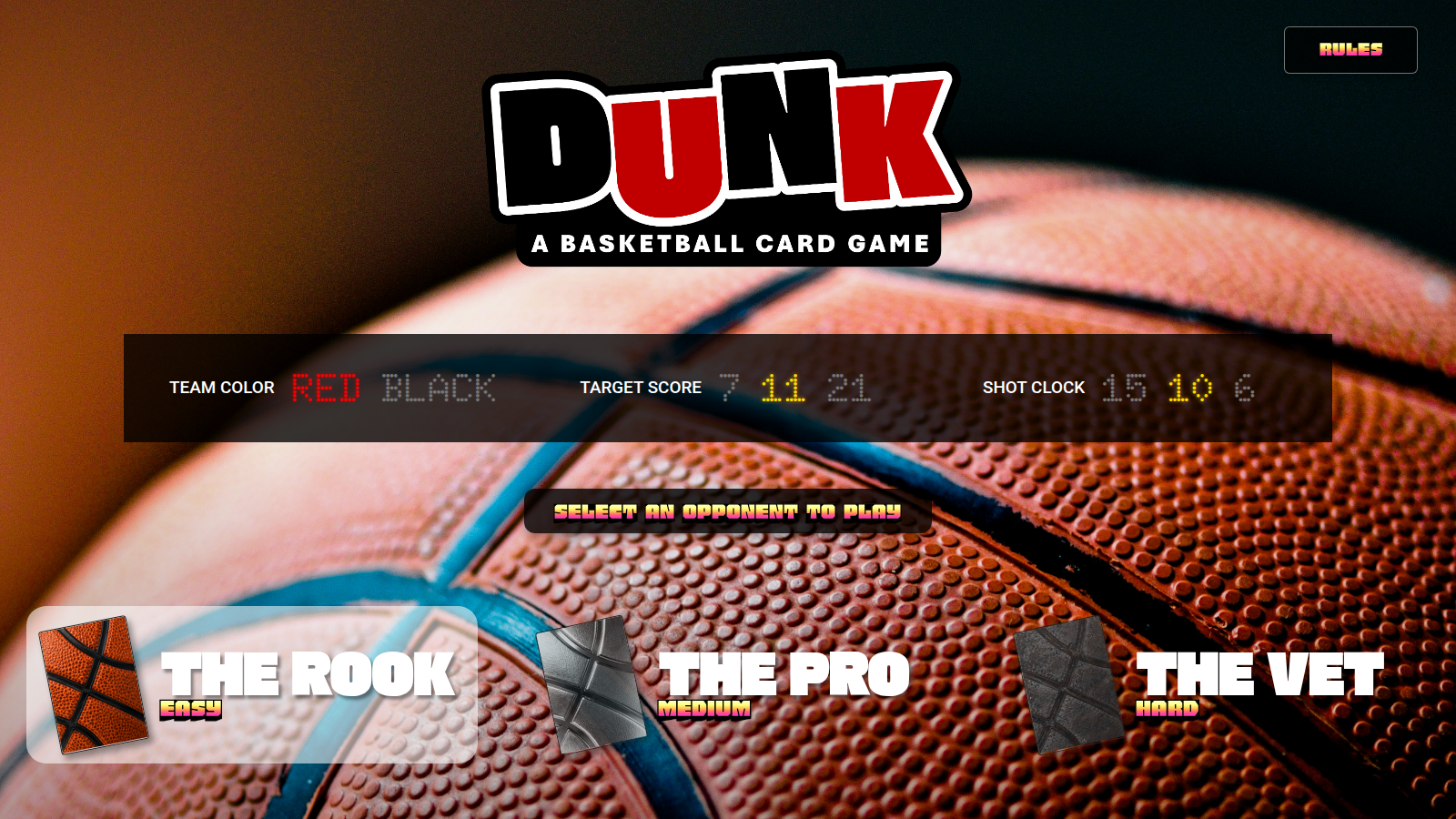
DUNK is a web game now, but it started with a friend, two decks of playing cards, and a question: could we make a basketball game out of what was already on the table?
We made the physical version in 2016. Each player had a deck and a Red or Black team. A card contest decided possession, then a Shoot/Defend phase decided whether the shot went in. Number cards counted at face value, J, Q, and K counted as 10, and an Ace counted as 11. Jokers were the fun part: a dunk in normal play, a three-pointer on offense, or an automatic block on defense. We had extra cases for ties, airballs, and And-1 plays. I put the original rules on Medium on July 20, 2016.
Then DUNK sat there for ten years. I still liked the idea, but it was a set of rules and a memory of playing with a friend. In 2026 I decided to see what happened if I made it playable on the web.
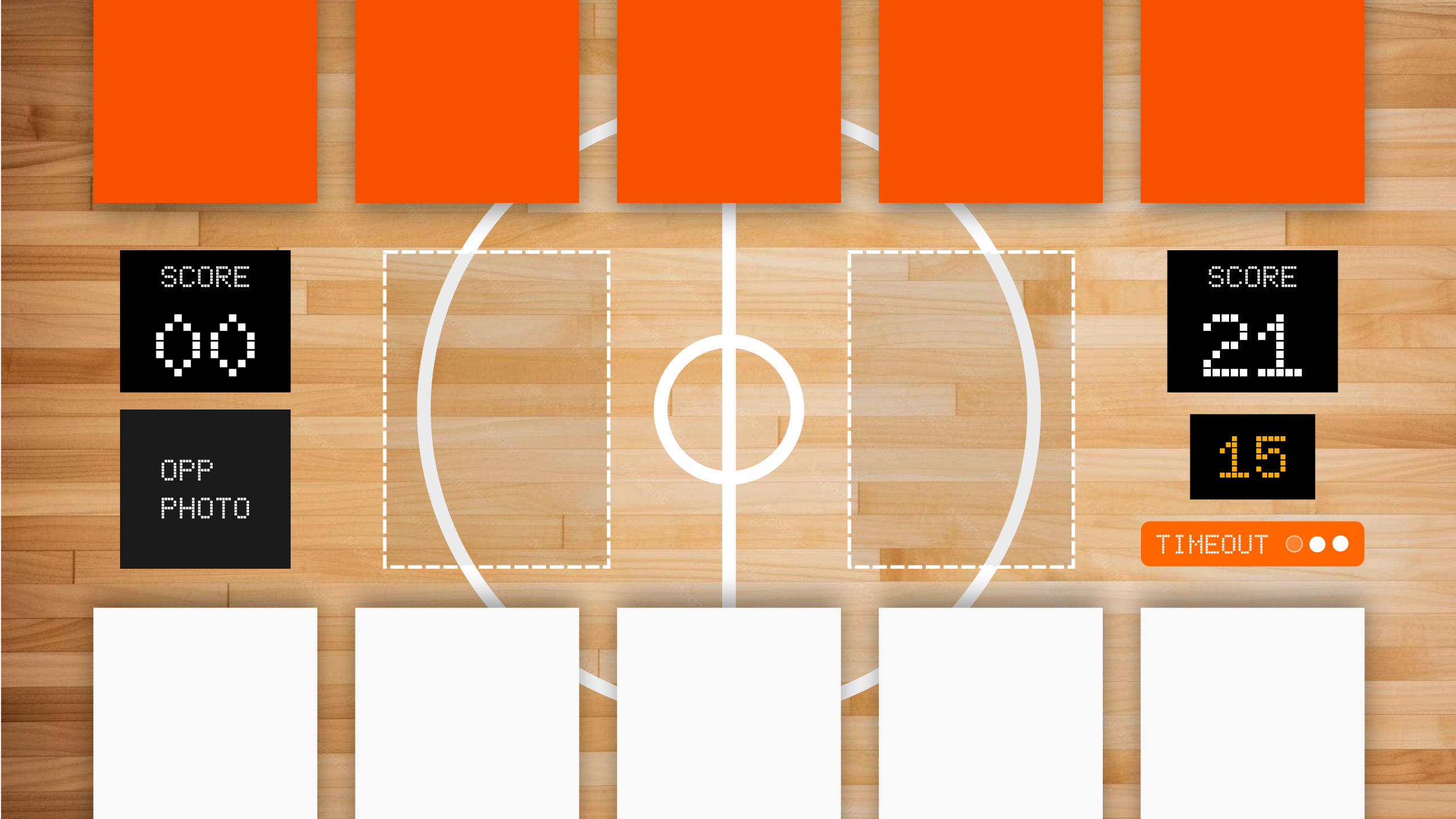
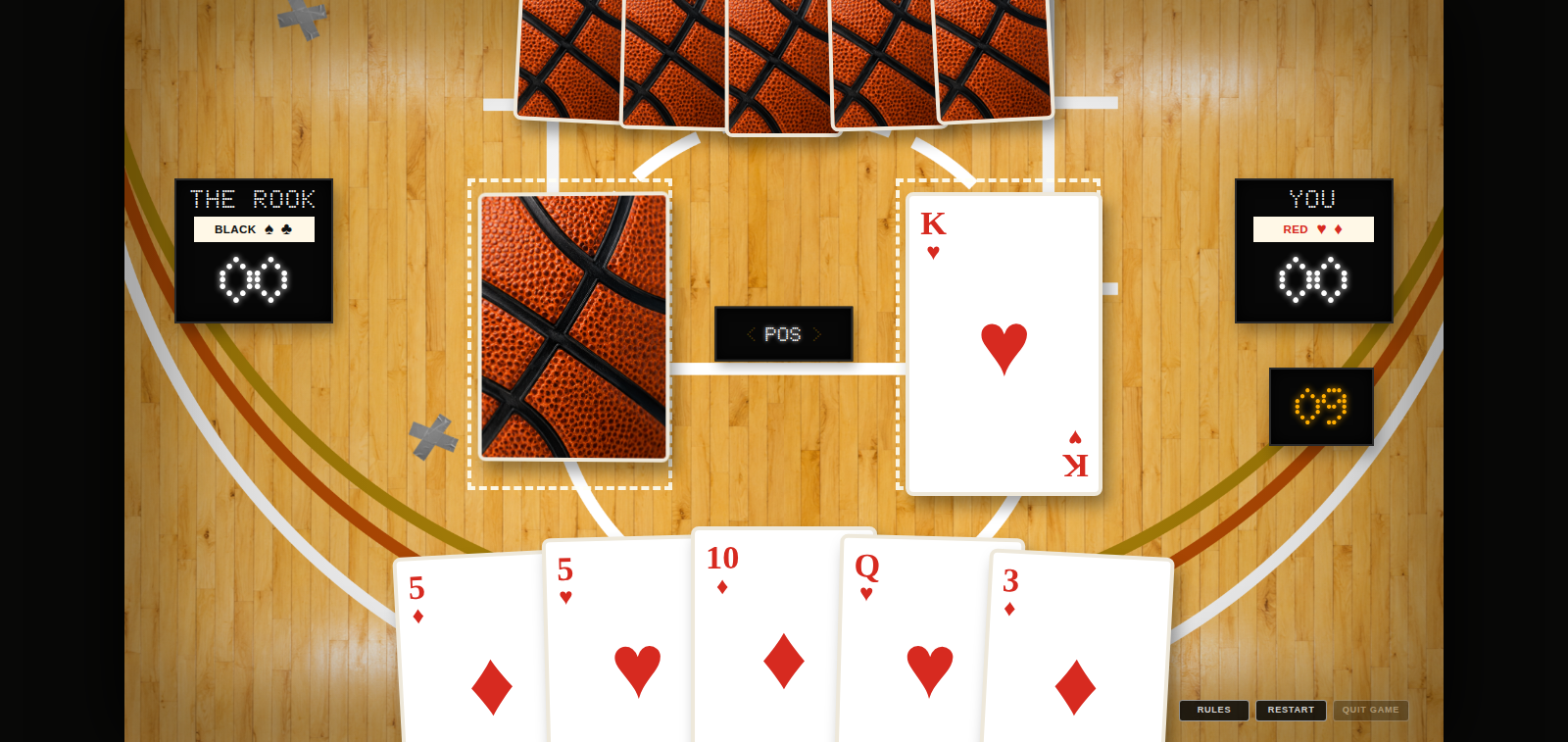
The first prototype gave me something much more useful than a polished plan: a game I could actually play and change. The early builds still carried over Jokers and the mixed-color hands from the tabletop version. I started sketching the screen as a court, with scoreboards, a shot clock, and room for cards to land.
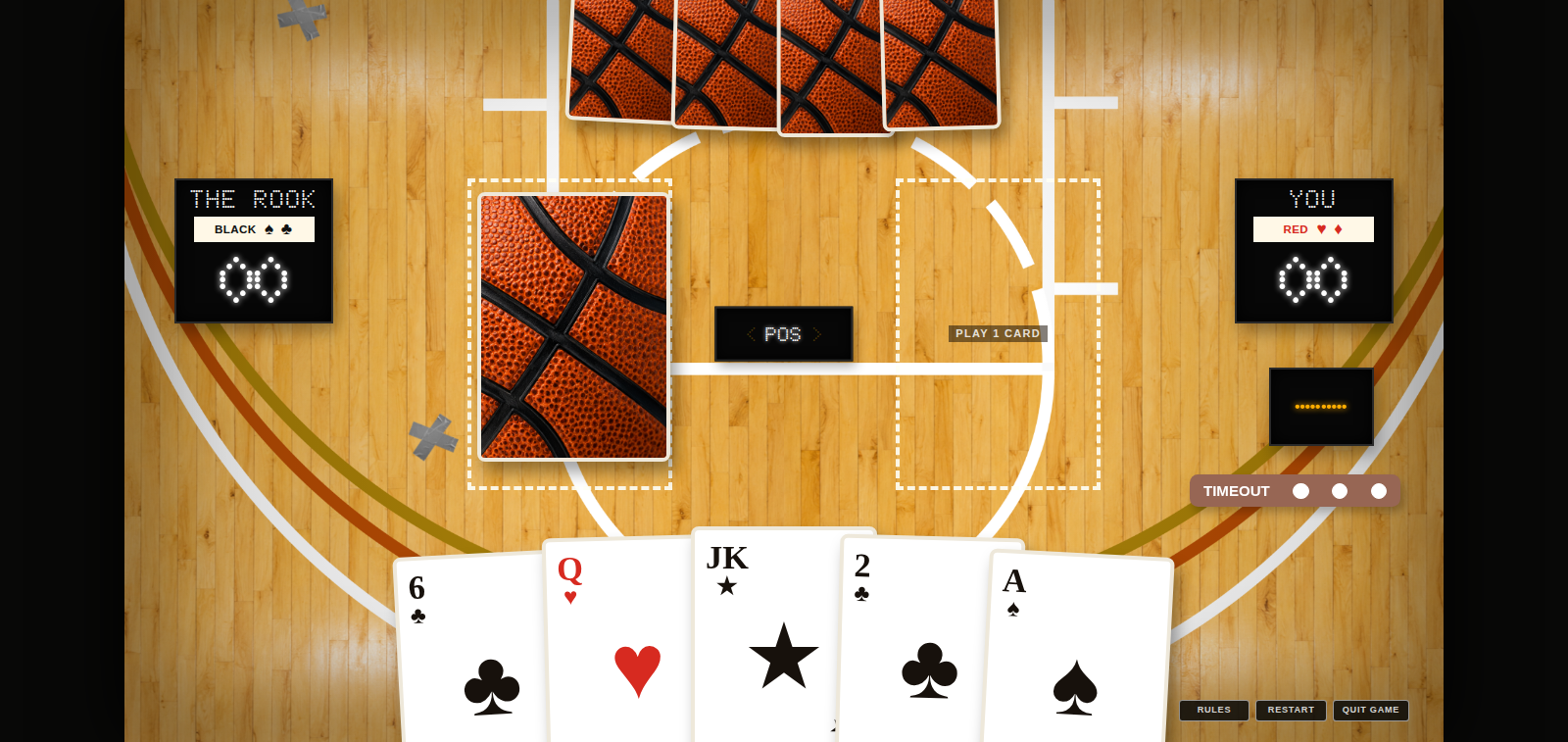
Playing the prototype kept changing my mind. For a while I changed possession to a blind draw from a deck. It worked, but I missed the decision. Choosing one card from a five-card hand made possession feel like a move I had made, so I brought that back. A tie now spends both cards, refills the hands, and asks for another choice.
The deck changed too. Two separate decks became one standard 52-card deck, split by color: Red gets Hearts and Diamonds, Black gets Clubs and Spades. Each side keeps a five-card hand and draws replacements after playing. Jokers went away; Aces took over the big basketball moments. An Ace that wins possession is a two-point dunk. In the two-card Shoot/Defend play, an offensive Ace makes an automatic three, while a defensive Ace blocks—even if the offense played one too. The ordinary cards still carry the contest, with J, Q, and K worth 10 in that phase.
I kept adjusting the pace while I played. The target score can be 7, 11, or 21, with 11 as the default. The shot clock can be 15, 10, or 6 seconds. None of that arrived as a perfect ruleset on day one; I tried things, played a few possessions, and kept what made the game better.
The opponents gave those choices some character. The Rook is eager and readable on a rec court. The Pro plays aggressively in an arena and is willing to spend a strong card. The Vet waits you out on a worn street court, saving the good stuff and anticipating your next play.
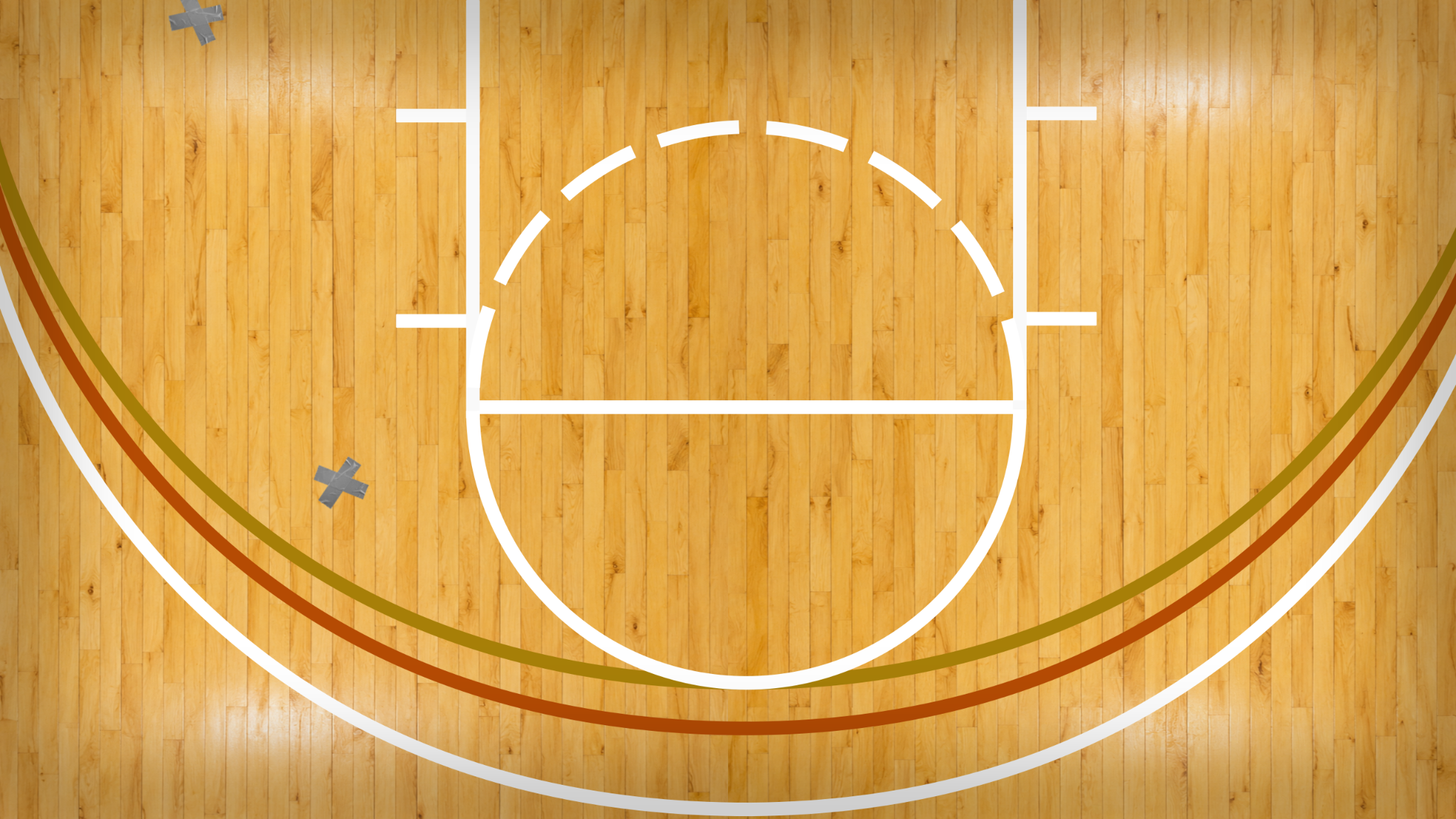
I wasn’t trying to make a literal digital view of cards on a table. I wanted a small basketball video game whose underlying mechanic happened to be playing cards. The court became the board. LED scoreboards, a possession indicator, and a dedicated shot clock gave each play some pressure. The player’s hand fans across the bottom, the opponent’s cards wait across the top, and played cards flip and stack in the middle. A stop or a bucket gets called out as BLOCK, SWISH, FROM DEEP, or POSTERIZED. By the end, it felt like basketball to me.
What started as two people messing around with decks of cards became something I could actually turn into the game I imagined ten years ago.
That’s probably my favorite part of revisiting old projects. Sometimes the idea wasn’t bad.
You just didn’t have the right tools yet.