Cat Crush
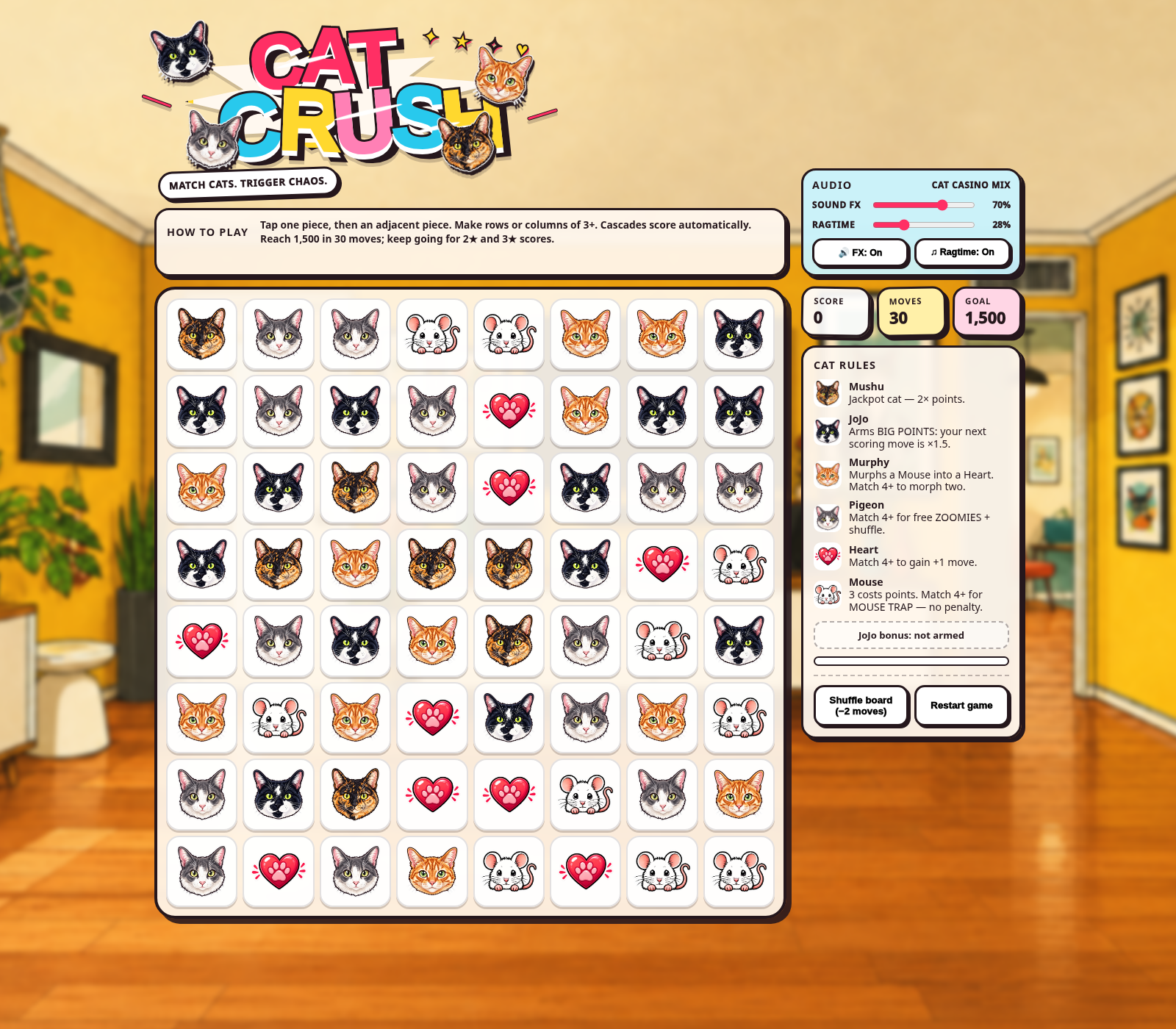
Cat Crush started with a pretty unoriginal idea: make a match-three game. There are approximately ten billion of them already. I wasn’t trying to invent a better way to line up three things. I wanted to see if I could make one that felt like mine.
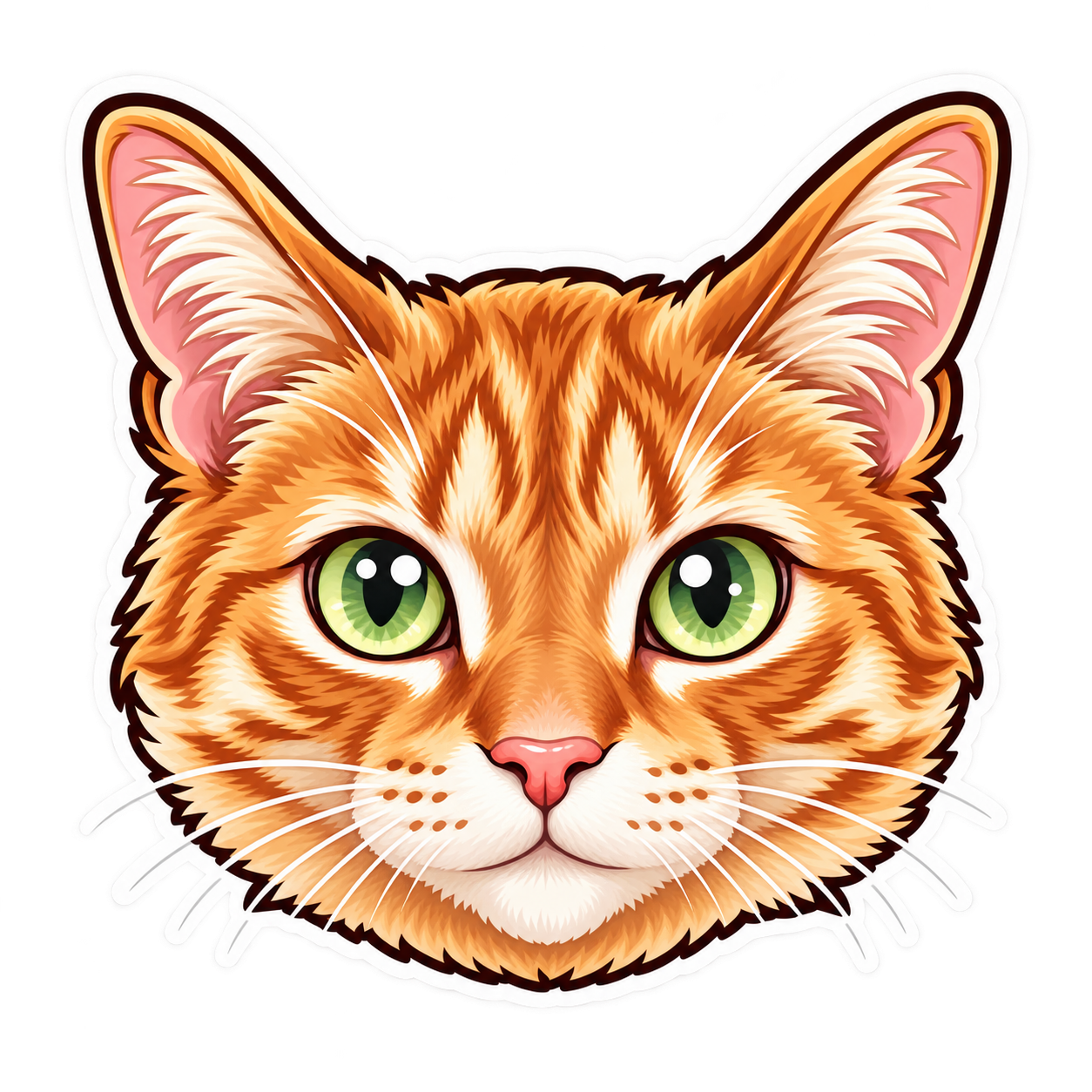
The obvious place to start was with the cats. JoJo is black and white. Pigeon is a gray-and-white ragdoll. Mushu is a tortoiseshell. Murphy is an orange tabby. I already knew their faces would be more fun to look at than gems or candy, so I made them the pieces on the board. A simple swap-and-match prototype was funny almost immediately. It was also still just a match-three game with cat pictures in it.
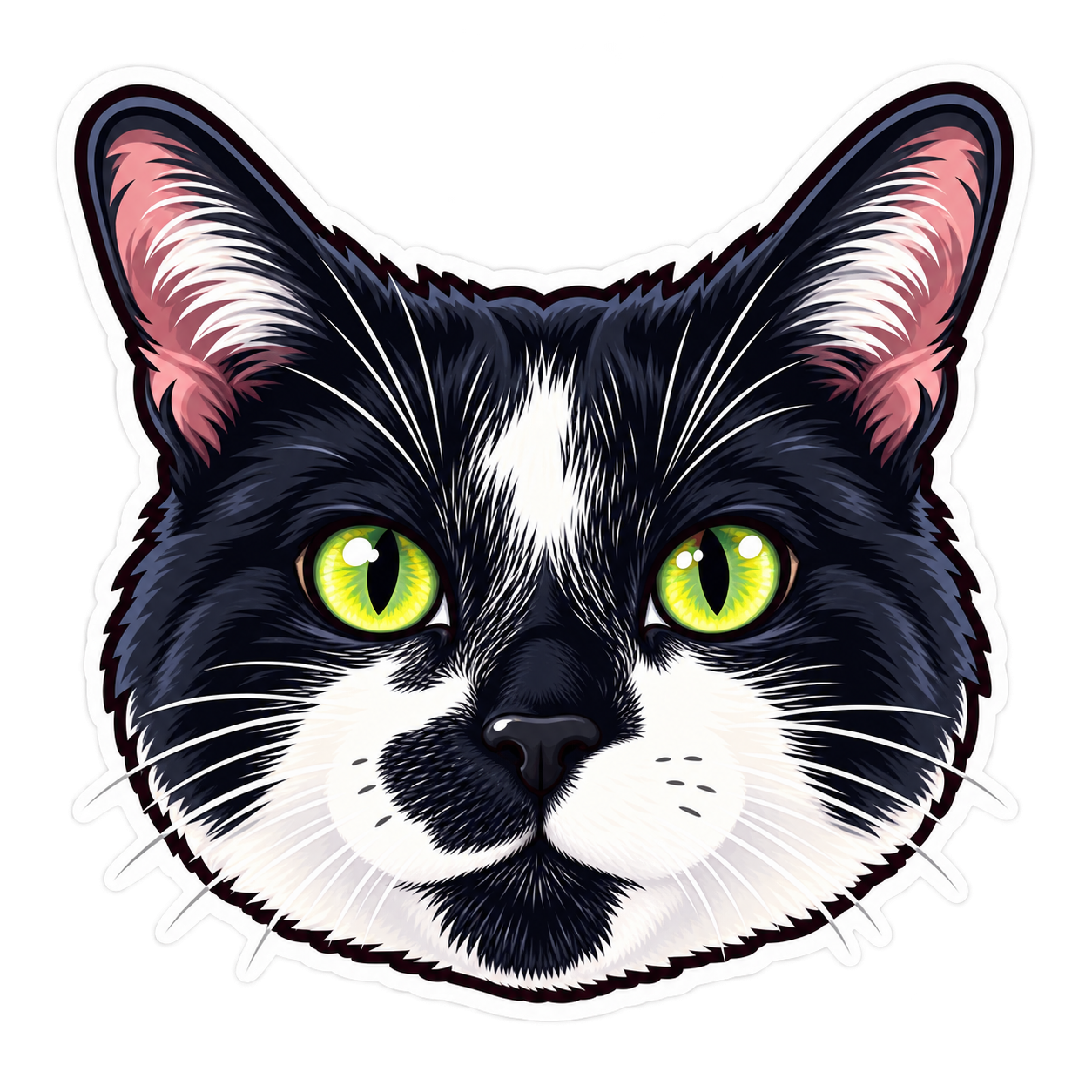
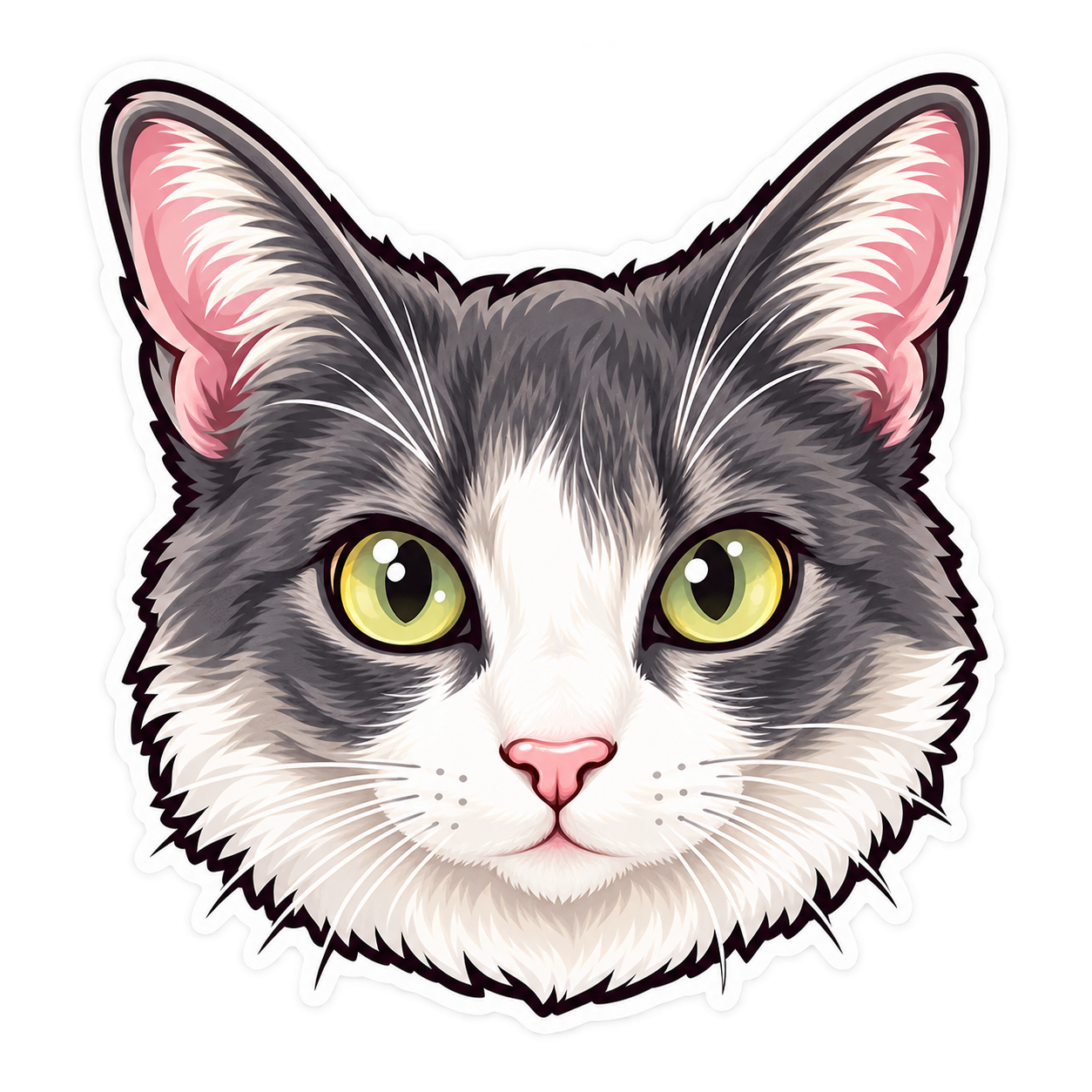
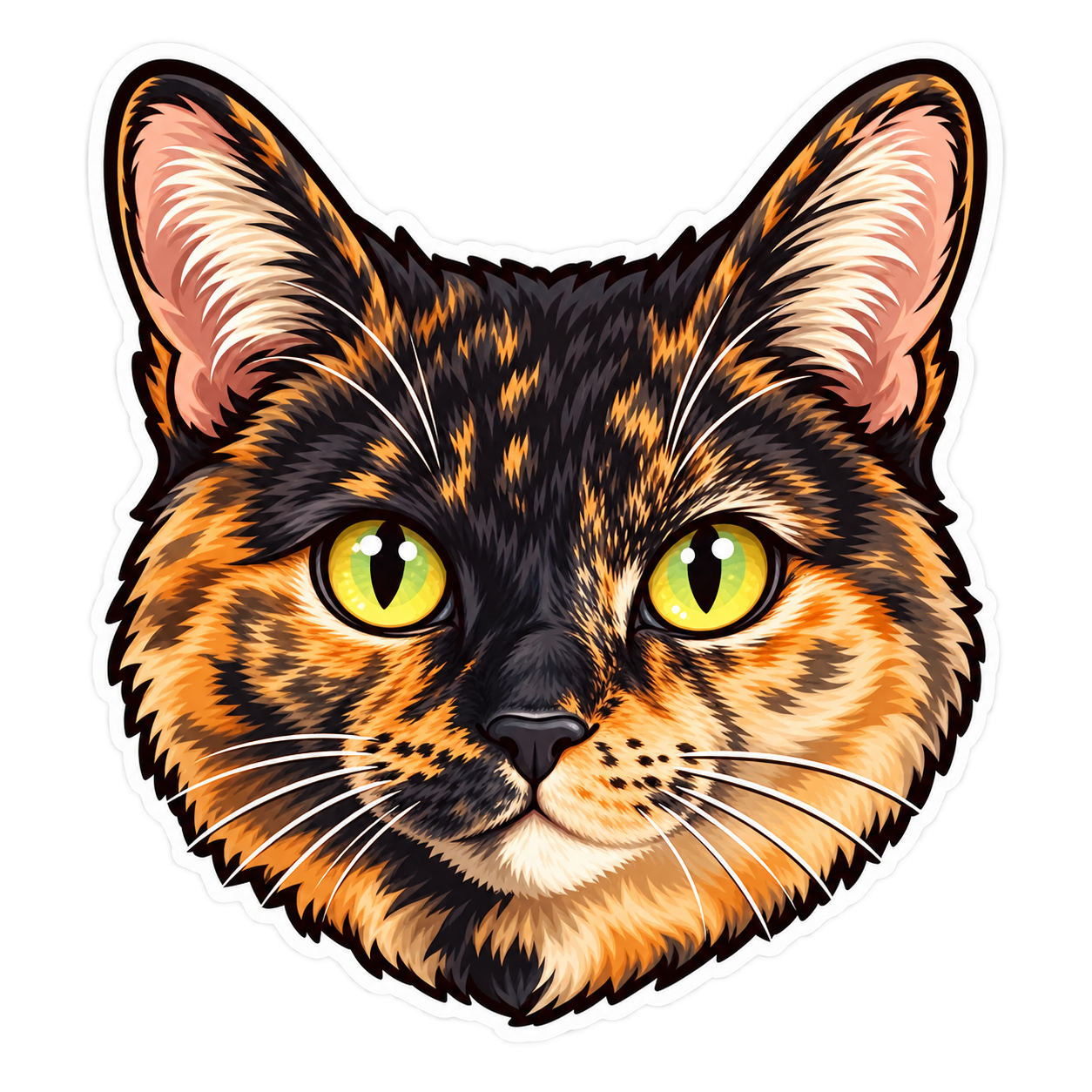
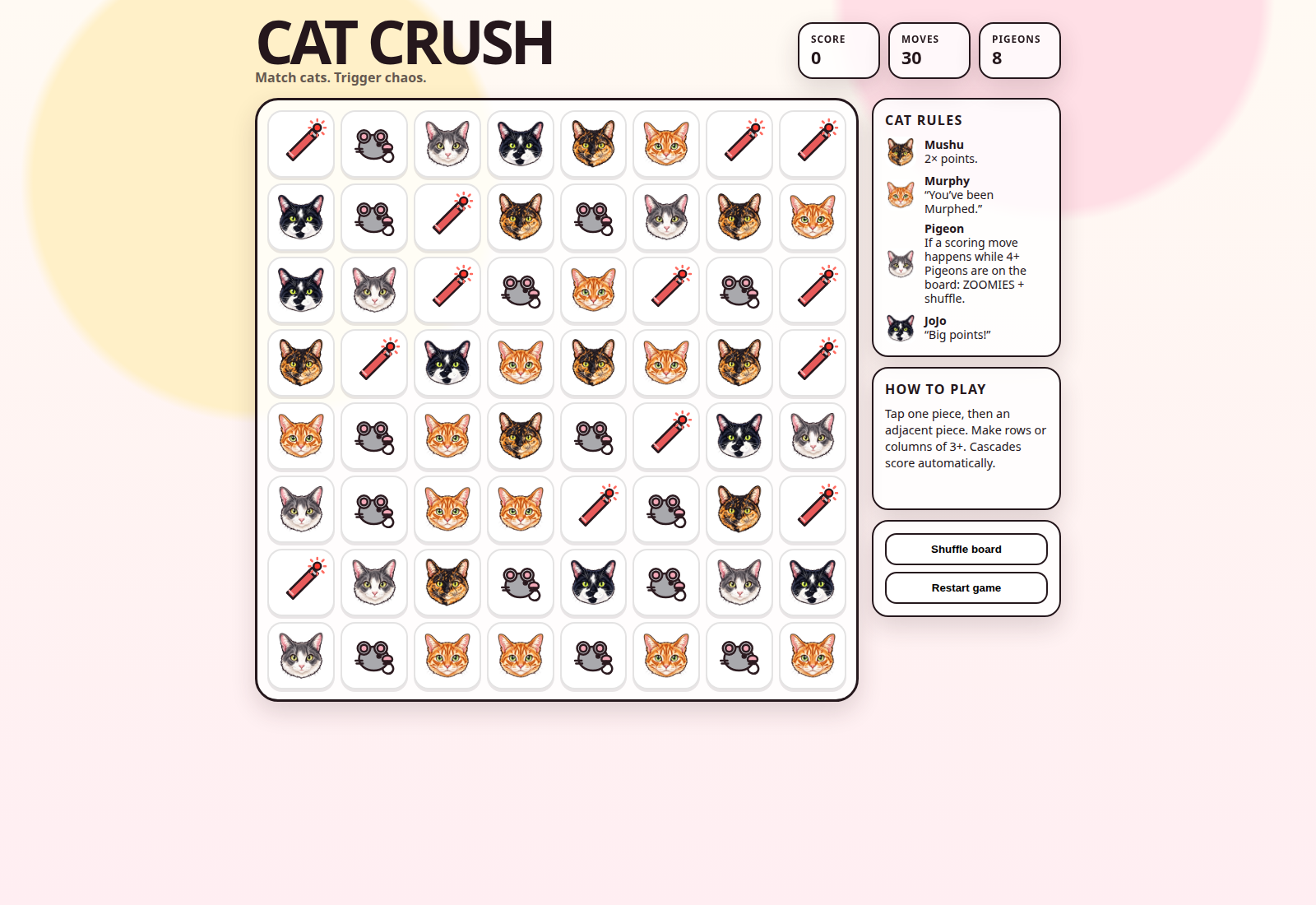
Once the basic matching worked, I started asking what each cat should do. Early on, some of the specials were little more than a message popping up. JoJo said “Big points!” and Murphy told you that you’d been Murphed, which was satisfying but left me wanting the joke to affect the game. An archived build still has a Laser Pointer as a filler piece and a Pigeon rule that shuffles the board whenever enough Pigeons happen to be visible during a score. It is recognizably Cat Crush, but the cats hadn’t quite taken charge yet.
Playing it made the next changes clearer. Mushu became the jackpot cat: her matched tiles are worth double points. Matching JoJo arms “BIG POINTS,” a bonus on the next successful scoring move. Murphy’s joke became useful and a little strange: matching him changes a Mouse on the board into a Heart, or two Mice if you match at least four Murphys. Pigeon got a more deliberate version of the Zoomies. Match four or more Pigeons and the board shakes, then scrambles for free after the matches finish. These were better than giving every cat the same generic point bonus. They gave me reasons to notice which cat I was matching.
The other pieces changed along the way too. The Laser Pointer went away and the Heart came in. Four or more Hearts in a match earn an extra move. Mice are trouble: matching three takes points away, while four or more spring a Mouse Trap and clear without the penalty. Now the board could be helpful, irritating, or both, depending on what turned up next. Cascades added another layer of surprise. I kept the game to 30 starting moves, then added a goal and stars so there was something to chase beyond one more swap.
That led to the presentation. Pieces pop out, new ones fall in, Murphy’s transformed tiles bounce, and Zoomies makes the whole board look briefly out of control. Big results flash across the board instead of hiding in a score counter. The plain prototype became a bright little cat casino, with the four faces around the title and the board set against an illustrated living room. I was still working with the same familiar puzzle underneath, but it no longer felt like a demo I had dressed up with cat stickers.
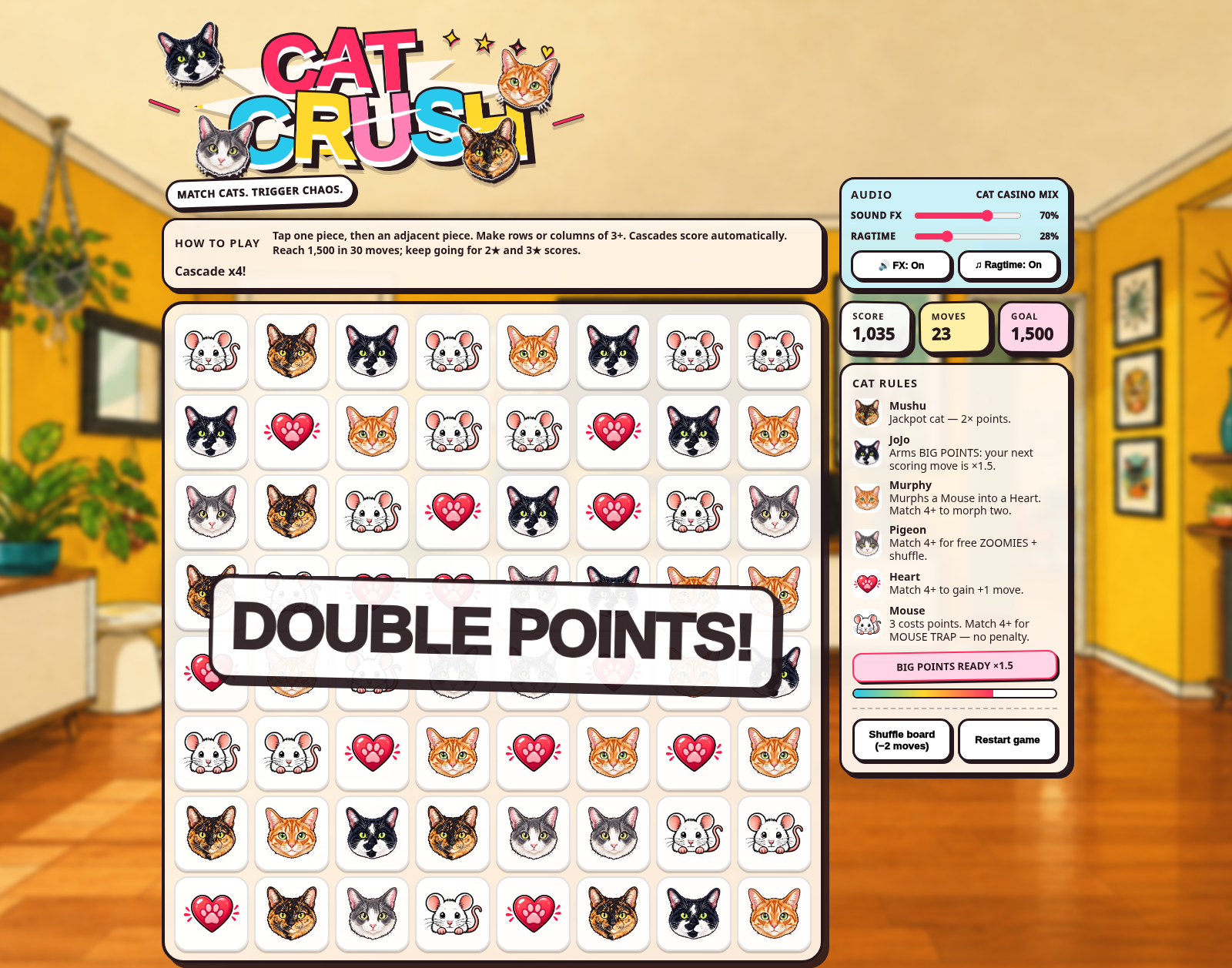
The sound followed the same path. I added little cat-like meows and chirps, then the clicks, dings, and rising notes of a game cabinet. The background music became a looping ragtime-style piano cue. It is all synthesized in the browser, and the Sound FX and Ragtime channels have separate volume controls and mute buttons. I wanted the music to give the game some bounce without making every match sound like a slot machine hitting a jackpot. Some matches still absolutely sound like a slot machine hitting a jackpot.
Cat Crush didn’t need a new kind of puzzle. Starting with a format everybody already understands let me spend the time on my own characters, jokes, sounds, and little surprises. What made it feel finished was the moment the cats stopped being decorations and started causing trouble.
Murphy, especially.